Nail Care · Safety & health · Updated July 2026
Nail care, before and after the salon
Price is a terrible sorting tool and so is decor. Here's what actually separates the salons worth your money — and the habits that keep your natural nails healthy underneath any style.
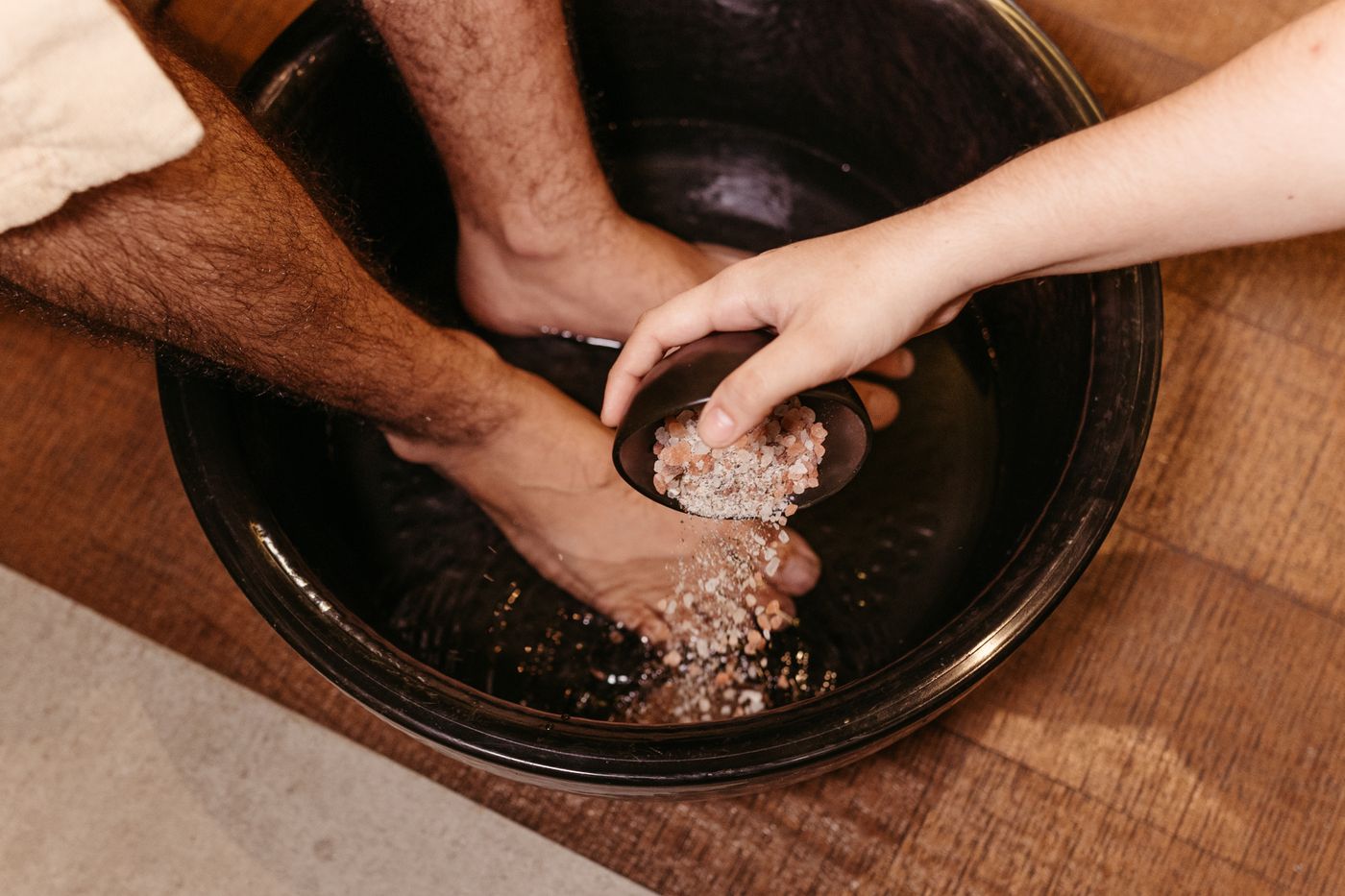
Green flags you can spot from the door
- Files and buffers come out of a sealed pouch — or they hand you yours to keep. Porous tools can't be sterilized.
- Pedicure bowls get liners, or you can watch them scrubbed between clients. Jets without liners are the classic corner cut.
- Metal tools come from an autoclave pouch, not a drawer or a jar of blue liquid alone.
- The tech asks about your nails — lifting, allergies, what you do with your hands — before picking a service. Listening is the cheapest quality signal there is.
- Appointment-only and small-team shops tend to trade volume for care. Some of the best salons in LA and Atlanta are one- and two-chair operations.
Red flags worth walking out over
- Pain treated as normal. Burning during filing or acetone means something's wrong. "Beauty is pain" is not a nail-care philosophy.
- Prying off old product with a tip or another nail instead of soaking. That's where "extensions ruined my nails" actually comes from.
- A drill on the natural nail plate at high speed. Fine for product removal; destructive on bare nails in rushed hands.
- No prices anywhere and a total that assembles itself at the register. Good salons publish or quote before starting.
- The MMA smell. A sharp, fruity-chemical odor that lingers can indicate cheap methacrylate monomer — banned for nail use in many states and brutal to remove safely.
The three questions
- "How do you remove a set?" The only right answer involves soaking and patience.
- "How long do you book for this service?" Quality gel work takes 45+ minutes; structured or Russian work 90+. If the slot is half that, so is the result.
- "Can I see recent sets you've done?" Every good tech has photos and shows them happily. Hesitation is an answer too.
Between appointments: the five habits
- Cuticle oil, daily. The single highest-return nail habit there is — flexible nails and cuticles resist lifting and breaking.
- Gloves for dishes and cleaning. Detergents and hot water are harder on gel edges than anything you do at the salon.
- Don't pick, don't peel. Peeling gel takes layers of natural nail with it. If it's lifting, book a removal — it's cheap compared to months of regrowth.
- Give nails a breather only if they need one. Healthy nails don't require "breaks" from gel — they require gentle application and removal. Damaged nails do better under a protective builder-gel overlay than bare.
- Watch for reactions. Itching or redness around the nail after gel services can signal developing acrylate allergy — mention it to your tech and consider a patch test before the next set.
Reading your nails: what those marks actually mean
- Vertical ridges (base to tip) are usually just age and genetics — the nail equivalent of fine lines. Buff gently, hydrate, move on.
- Horizontal dents or grooves across the nail (Beau's lines) mark a moment the nail paused growing — illness, stress, or an overly aggressive manicure at the cuticle. They grow out in a few months.
- White spots are almost never a calcium thing, whatever the internet says. They're usually minor trauma to the nail plate — often from picking off polish or a knock you don't remember.
- Peeling, papery tips point to dehydration or too much acetone exposure. Shorten the nails, oil daily, and space out soak-off services for a cycle or two.
- Yellow staining after dark polish is pigment absorption, not damage — a base coat prevents it. Yellow thickened nails are a different story: see a professional.
- A green-gray patch under an enhancement ("greenies") is a pseudomonas bacterial mark that grows where product lifted and moisture got trapped. It needs the enhancement removed and the nail kept dry — and it's the salon-hygiene tell to take seriously.
Gel allergies: the fine print nobody reads
Acrylate allergy is the quiet risk of the gel era — usually caused by uncured product touching skin, cheap no-name gels, or underpowered curing lamps (a real hazard with bargain home kits). Once developed, it's permanent, and it can rule out not just gel nails but some dental and medical adhesives later in life.
- Watch for: itching, redness, or blistering around the nail folds or fingertips in the day or two after a gel service; lifting sets on previously reliable nails.
- Reduce the risk: a tech who applies product cleanly (never flooding skin), name-brand gel systems, and a properly matched lamp. This is a real reason the cheap salon isn't cheap.
- If you suspect it: stop gel services and ask a dermatologist about patch testing before your next set — don't push through the itch.
Nail myths, debunked
- "Nails need to breathe." They can't — nail plates are dead keratin with no airways. What nails need is moisture and gentle handling; damage comes from rough application and removal, not from being covered.
- "Gel ruined my nails." Almost always, the removal ruined the nails — peeling, prying, or over-filing. Properly applied and soaked-off gel leaves nails essentially as it found them.
- "Cutting cuticles is fine — it's standard." The living cuticle seals the nail matrix against infection. Dead tissue on the plate can be cleaned; cutting into the living seal is how salons cause the infections they get blamed for.
- "Gelatin / more calcium = stronger nails." Neither is supported by evidence for people with normal diets. The one supplement with some clinical backing is biotin for genuinely brittle nails — worth asking a doctor about, not worth megadosing on spec.
- "Water makes nails stronger." Backwards — repeated wet-dry cycles are the main driver of peeling and splitting. Hydration helps when it's oil-based and sealed in, not from soaking.
When to skip the salon and see a professional
A good nail tech is not a doctor, and the great ones are the first to say so. Go to a dermatologist or podiatrist — not a salon appointment — for: a dark streak or spot under the nail that's new or changing (worth ruling out melanoma, especially if it extends into the cuticle), a nail separating from its bed, spreading redness or pus around the nail, thickened crumbly nails that might be fungal, or any nail problem alongside diabetes. Fungus in particular can't be fixed by covering it — enhancements over an infected nail make it worse. For diabetic clients, specialized services exist for a reason: Atlanta's Pedicure Loft, for example, offers dedicated diabetic restorative care built around exactly these precautions.
The 60-second weekly routine
- File in one direction with a fine (240+) grit to smooth any snags — sawing back and forth splinters the tip layers.
- Oil every cuticle — jojoba and vitamin E blends absorb best; even plain olive oil beats nothing.
- Seal with hand cream over the oil, gloves on if you're about to do chores.
- Glance at each nail — using the reading guide above — so changes get noticed while they're small.