At Home · Foundations · July 2026
The starter kit: 8 tools that actually matter
You do not need the 42-piece kit with the mystery implements. A genuinely good home manicure setup is about eight items and $40 — here's the list, what each one is for, and the weekly routine that uses them.
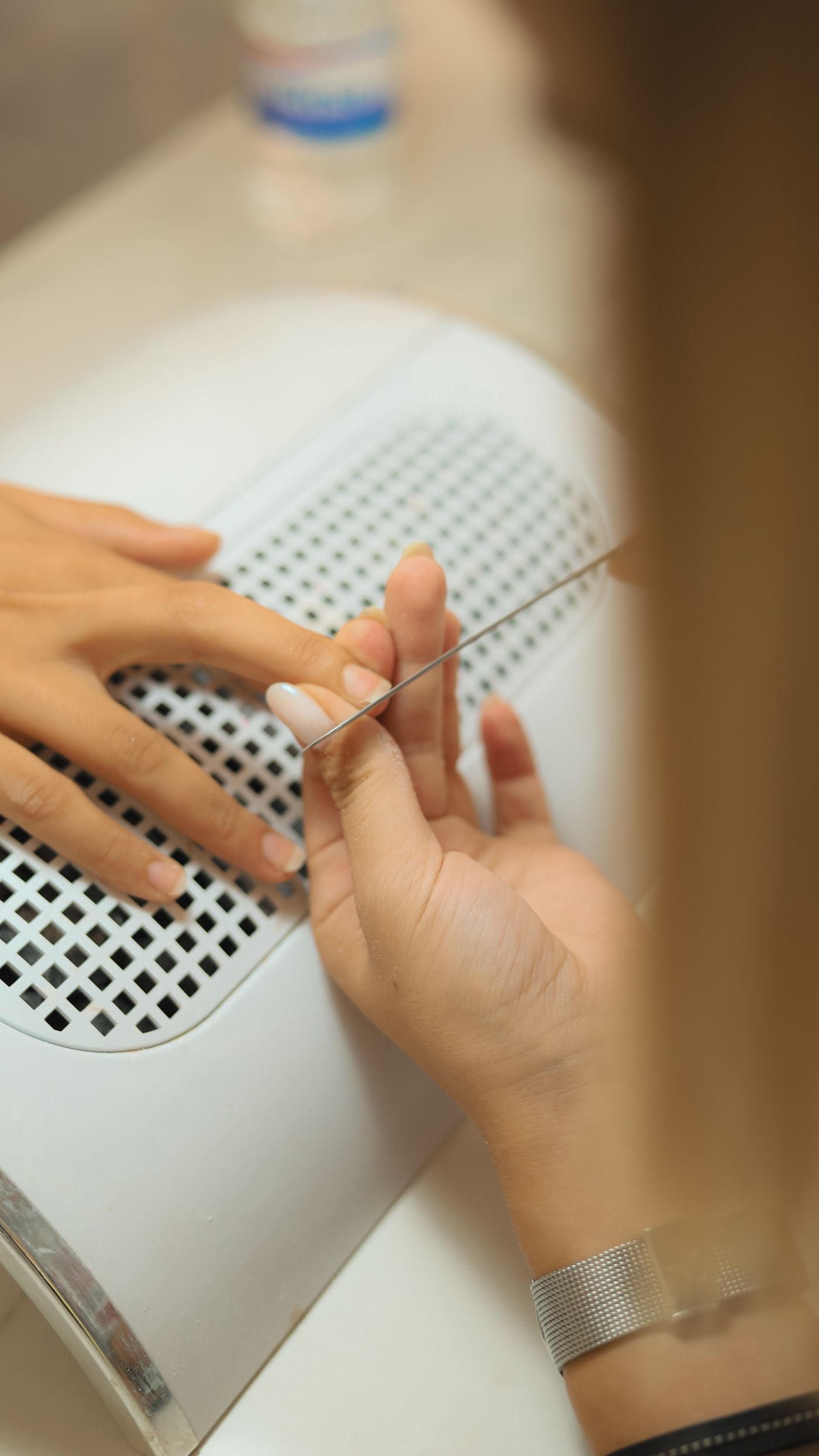
The eight that matter
- A glass (crystal) file. The single best upgrade over emery boards: finer grit, seals the nail edge as it files, lasts years, washable. File in one direction — the back-and-forth saw splinters the tip layers.
- A 240-grit buffer. For smoothing snags and a light once-over before polish. Sparingly — a buffer is sandpaper, and your nail plate is only so thick.
- Cuticle remover (the liquid kind). Dissolves the dead tissue stuck to the plate so you can push it back cleanly. Far safer than cutting — which, per the nail care guide, you should leave to professionals or skip entirely.
- A rubber-tipped cuticle pusher. Gentler than metal for home use. Push softly after a shower when everything's soft; never dig at the living seal.
- Cuticle oil — the hero item. Jojoba-based absorbs best. Daily oil is the highest-return nail habit there is, full stop. Keep one at your desk and one by your bed; the bottle you can reach is the bottle you'll use.
- A proper base coat and top coat. Base coat stops staining and helps polish grip; top coat is what actually makes a manicure last. They are not the same product wearing two labels — buy both.
- Pure acetone and cotton pads. For clean removal — the non-acetone stuff works for light polish but turns gel removal into a 40-minute ordeal. See the removal guide for the technique.
- A cleanup brush. Any small flat brush dipped in acetone erases the evidence along the sides. This one tool is half the difference between "did it myself" and "salon fresh."
What you can skip
- Metal cuticle nippers. In untrained hands they're how home manicures draw blood. The remover-and-pusher combo does the job safely.
- The electric file. A pro tool with a real learning curve — an e-file in a hurry does more damage in thirty seconds than a month of typing. Not a starter item.
- Nail hardeners with formaldehyde. They make nails harder but more brittle — hard and flexible are different goals, and flexible survives real life better. Oil beats hardener for most people.
- The 42-piece kit. Thirty-four of the pieces exist to make the box look full.
The 15-minute weekly routine
- Remove old polish completely — including the invisible layer that dulls fresh color.
- Shape with the glass file, one direction, to a shape your week can survive — round and squoval are the durability champions.
- Cuticle remover on, wait 60 seconds, push back gently, rinse. No cutting. Dead tissue on the plate comes off; the living seal stays.
- Light buff only where there are snags or ridges.
- Wash and fully dry — water swells nails, and polish on swollen nails lifts early. This is the step everyone skips and then blames the polish.
- Paint or don't — a bare, oiled, well-shaped nail is a finished look. If painting, continue to the perfect-polish guide.
- Oil every cuticle to close, whether you painted or not.
The honest budget: glass file ($8), buffer ($3), cuticle remover ($8), pusher ($4),
oil ($8), base + top coat ($12), acetone and cotton ($6), any small brush ($3). About $50 all-new,
less than one salon visit — and the oil alone will outperform half the services you've paid for.