The Nail File · History · July 2026
The French manicure isn’t French
It was invented in Los Angeles, named after Paris for marketing reasons, declared dead at least twice, and is currently on half the hands in America. The strange history of nail art's most durable idea.
The origin story everyone tells
In 1976, Jeff Pink — the founder of the nail brand Orly — was working with Hollywood film productions and running into the same problem over and over: actresses changed costumes constantly, and their manicure had to be redone for every look. Repainting nails between setups was burning time nobody had.
His solution was a manicure that went with everything: a neutral, natural-toned nail with a clean white tip. He called it the Natural Nail Look. It did exactly what it was designed to do — one manicure, every costume, no repaints — and it spread from film sets outward. When he later showed the look to fashion houses in Paris, he renamed it the French manicure, and that is the name that stuck.
The claims that complicate it
You will find confident articles asserting that white-tipped nails date to 18th-century France, or that Max Factor did it in 1930s Hollywood. Treat these gently: the documentation is thin, the sourcing tends to circle back on itself, and "contrasting tip" is a broad enough idea that someone, somewhere, almost certainly did it earlier.
The honest verdict: the general notion of a lighter tip is old and murky, but the named, commercialized, salon-menu French manicure we all recognize is a 1970s American product. Both things can be true.
The rise: the 1980s and 90s
The French tip arrived at the exact moment the acrylic industry was exploding — the extensions boom described in our extensions guide — and the two fused. A long acrylic set with a bright white tip became the defining nail look of the era, and the French became the default for two markets that never go out of style: bridal and professional. It was the manicure you got when you wanted to look finished without making a statement.
The fall: the 2000s
Ubiquity killed it. By the mid-2000s the French had been done so many times, so thickly — a hard stripe of opaque white, often airbrushed, often too deep — that it stopped reading as classic and started reading as dated. For most of a decade, asking for a French manicure was a little like asking for frosted tips. It survived where it had always been safest: weddings.
The return: 2016 to now
Then it came back, and it came back as a whole family rather than a single look. The revival's descendants are all in our finishes guide:
- The micro French — a hairline tip instead of a stripe. Harder to paint, quieter to wear, and the version that made the style credible again.
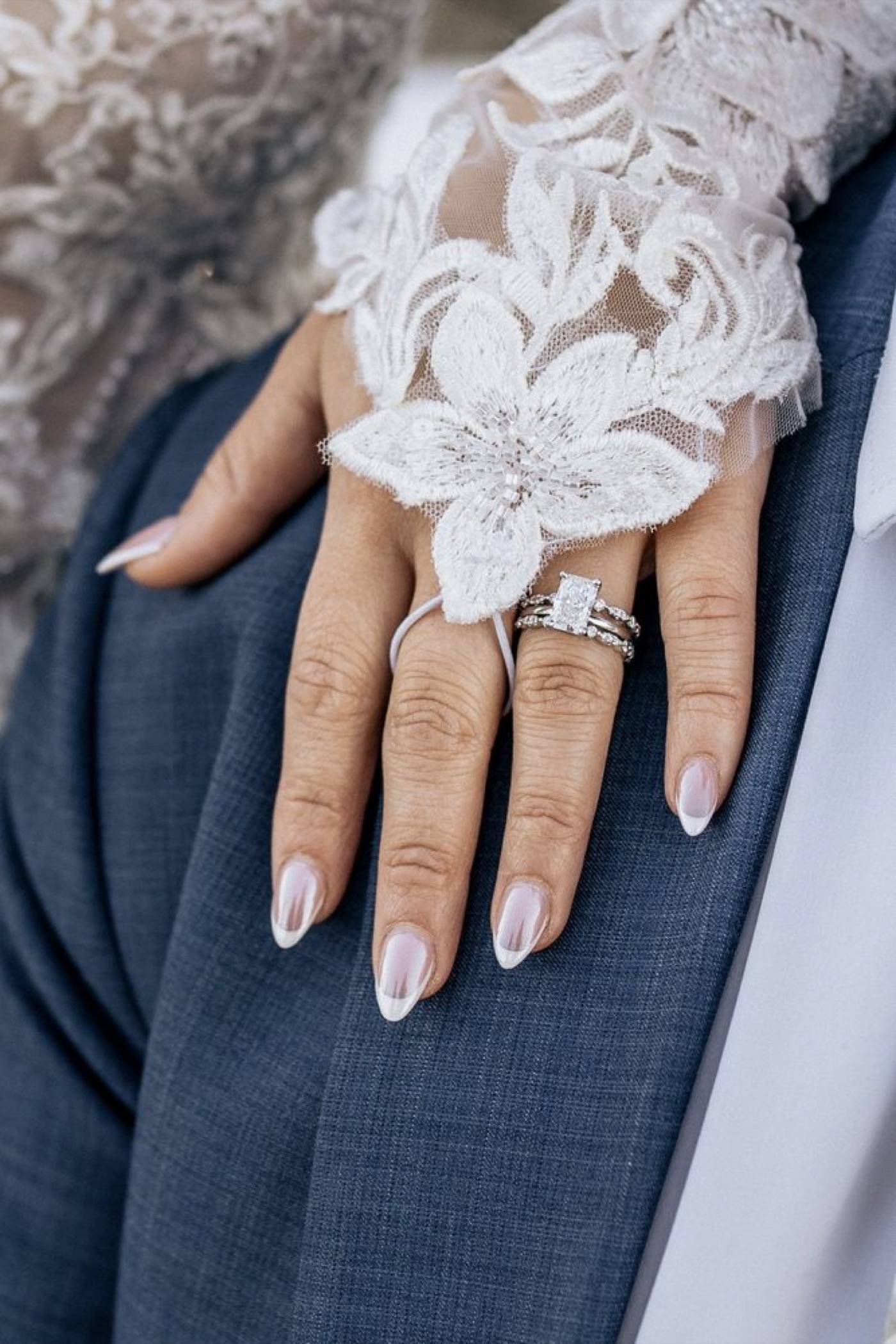
- The milky French — a sheer, milky base with a softened tip, blurring the contrast that made the 90s version look heavy. This is the "clean girl" default and the current bridal standard.
- Colored and chrome French — the same architecture in any finish, from a neon tip to a mirror-chrome smile line.
- The double French — two stacked lines, which is really the style admitting it has become a design system.
Why it refuses to die
Here is the actual reason, and it is a design reason: the French is an architecture, not a color. Almost every other nail trend is a specific look that eventually feels of-its-moment. The French is a structure — base, smile line, tip — and every part of it can be swapped without breaking the idea. Each trend cycle simply re-skins it.
It also solves real problems. It flatters short and long nails alike, it works over any nail shape (shape guide here), and — the underrated part — it grows out gracefully. A solid color develops an obvious gap at the cuticle within two weeks. A French just looks like slightly longer nails.
How to ask for the one you actually want
Because "French" now means eight different things, name three variables when you book: the base (sheer, milky, opaque), the tip thickness (micro, classic, deep), and the finish (glossy, matte, chrome). "Milky base, micro tip, glossy" gets you the current standard in any salon in the country — including all 81 cities we cover. Bring a photo anyway; the etiquette guide explains why techs genuinely prefer it.